The Stanford Eye Laser Center
Your eyes tell a great story...why hide them behind glasses?
Call (650) 498-7020
for appointments or information
Stanford University Medical Center has over a century's heritage of innovation and care. The Stanford Eye Laser Center is an integral part of that heritage, committed to the safest and most advanced techniques for correcting vision. Vision that is less reliant on traditional correctional methods such as glasses and contact lenses means greater mobility, freedom and safety—and the Stanford Eye Laser Center is a leader in the technology that makes such unhindered vision possible. More
When it comes to something as important as your vision, there should be no compromise in the level of medical expertise you devote to it. The Stanford Eye Laser Center offers procedures in LASIK, Wavefront LASIK (Custom LASIK), IntraLASIK, and Photo-Refractive Keratectomy (PRK), SMILE, and Contoura Topography Guided. The latest technologies for laser vision correction are employed, featuring the VISX Star S4 IR with Active Trak, the iDesign Wavefront System, the Wavescan Wavefront System, the iFS™ Advanced Femtosecond Laser, Visumax Femtosecond Laser, the Oculus Pentacam, and the Allegretto Wave® Eye-Q 400 Hz Laser.
Dr. Edward Manche and the Stanford Eye Laser Center staff wish to provide you with all the information you need to determine whether laser vision correction is right for you. Please browse our site, review the procedures, and contact us with any questions.
The Stanford Eye Laser Center offers world-class eye laser services at Stanford in Palo Alto, and also serves patients in Atherton, Menlo Park, Los Altos, Portola Valley, Mountain View, Redwood City, and the San Francisco Peninsula communities of Belmont, Burlingame, Foster City, Hillsborough, San Carlos, Sunnyvale, San Jose, Saratoga, Cupertino, the Silicon Valley and the entire San Francisco Bay Area Region and beyond.
NEW SYSTEM EXPANDS LASER EYE TREATMENT
Meet Dr. Manche
Edward E. Manche, M.D., Director of Cornea and Refractive Surgery and Stanford University Professor of Ophthalmology.
Understanding Lasik
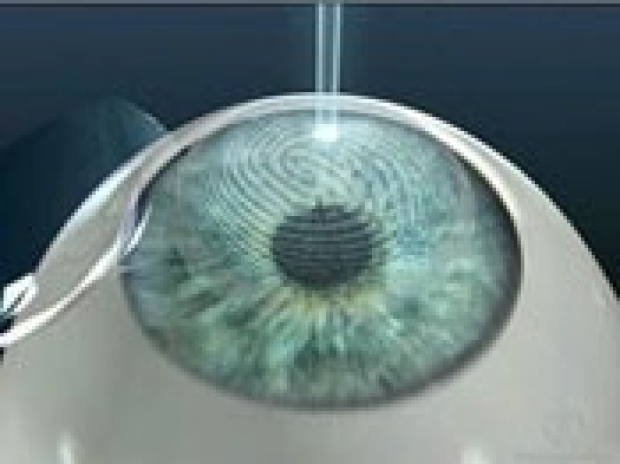
Understand your vision correction options and procedures.